How Much Does a Custom Neon Sign Cost in the UK?

If you ask a bunch of sign makers how much a custom neon sign costs, they'll all give you different answers - basically, that it depends on a lot of things. And while that's true, it's not exactly what you want to hear when you're trying to figure out if your sign is going to cost a little or a lot - like, is it going to be around £70 or more like £700? You need a better idea of the costs to make a decision.
So here are actual numbers. We make custom LED neon signs in our UK workshop every day, and this is what people genuinely pay, what pushes the price up, and where the money quietly disappears if you're not careful.
The short answer
For a custom LED neon sign made in the UK, expect to pay roughly:
You can get small signs that are 30 to 60 centimetres wide for a price range of £50 to £150. These signs are usually used for a single word, a name, or a small symbol. If you want a custom sign, the price starts at around £50, and a standard text sign typically costs between £80 and £100.
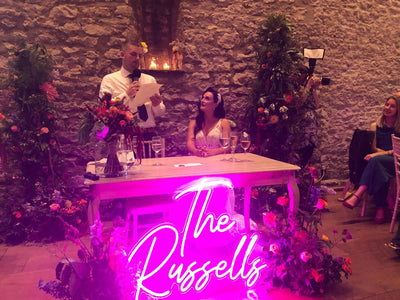
- Medium signs (60–100cm): £150–£300. Short phrases, simple logos, most wedding signs.
- Large signs (100–150cm+): £300–£800. Statement wall pieces, shopfront signage, detailed logos.
Traditional glass neon signs are a whole different story. They're made by hand, with each tube carefully bent over a flame by a skilled specialist. This means that even small glass signs can be pretty pricey, starting at around £300, and can cost thousands of pounds for bigger or more complex designs. But here's the thing: when most people talk about "neon signs" these days, they're not actually referring to traditional glass neon. Instead, they're usually buying LED neon signs, which mimic the look of traditional neon at a much lower cost.
What actually determines the price
When it comes to designing with LED neon tubes, the length of the tubing is a major factor to consider, not just the width of the sign. The amount of tube used in a design can greatly impact the overall cost. For instance, a simple word like "Bar" in a bold, chunky script requires significantly less tubing than a more elaborate phrase like "Cocktails & Dreams" in a flowing, cursive font, even if they're the same width. This is because cursive fonts often feature loops and flourishes that, although beautiful, add to the overall length of the tubing needed. Each loop and swirl may be aesthetically pleasing, but it also means more tube, more time, and ultimately, more money.
Generally, when you have two lines of text on a single board, it's cheaper than getting two separate signs, but more expensive than having just one line. This is because each additional line requires more tubing and takes longer to assemble.
Colour choices. A single-colour sign is standard, and mixing two or three static colours adds a little. Pick colours you'll love in five years; the sign will still be working.
Backing style. The clear acrylic backing comes in a few cuts. A simple rectangle is cheapest, cut-to-shape (the acrylic follows the outline of your design) costs more because of the extra machine time, and printed backboards sit somewhere in between.
Indoor vs outdoor. Waterproofing a sign for outdoor use means sealed tube, protected connections and an outdoor-rated power supply. Expect it to add 20–40% to the price. Worth every penny if the sign lives outside; wasted money if it doesn't.
Extras. A remote dimmer typically adds £10–£25 and, honestly, we'd recommend one for almost every sign. Being able to drop a bright sign to a soft glow changes how much you actually use it.
Some real-world examples
Let's take a look at what typical projects usually end up costing, to give you a better idea of what to expect.
You can get a name sign for a bedroom with the name "Rachel" on it. The sign is about 50cm long and has a simple script. It only comes in one colour. The price is between £70 and £110.
You can get a beautiful "Better Together" wedding sign with elegant cursive writing for a pretty reasonable price - as low as £100 for a smaller one, and around £180 to £280 for a bigger piece that's over 100cm. The good thing is, a lot of couples sell these signs after their wedding, which helps make the cost a bit more manageable.
A business logo sign can cost anywhere from £100 for a basic design to £250-£400 for a larger, more complex one that's over 80cm and features symbols and multiple colours, all depending on just how intricate the logo itself is.
A large shopfront sign, 150cm, waterproofed with a bold font: £500–£900.
Why is there such a range between companies?
When you're shopping for custom neon signs online, you might notice that prices can vary wildly - from as low as £40 to over £1,000 for something that looks pretty similar. But what's really going on here? The thing is, the differences between these signs aren't always obvious from a product photo. There are some key factors that can affect the price, and they're not always visible at first glance.
LED Density Matters. When it comes to signs, using tubes with fewer LED chips inside is a common way to cut costs. But the downside is that, up close, you'll notice individual dots instead of a smooth, continuous glow. This is probably the most noticeable difference in quality, and it's also the easiest way for manufacturers to skimp out. If you want a sign that looks great, you need to pay attention to the LED density. It's what sets cheap signs apart from high-quality ones.
Rushed builds and unglued joints. A lot of cheaper signs are simply rushed out of the workshop, and one shortcut you'll almost never spot in a product photo is the silicone connections and joints. Many companies don't glue them at all - the pieces are just pushed together and sent out. It cheapens the finish, leaves visible seams and light gaps where the glow breaks up, and over time those loose joints can shift, or let dust and moisture creep in. Gluing and sealing every silicone joint properly takes longer, which is exactly why the cheapest signs skip it. But it's the difference between a sign that reads as one continuous line of light and one that looks pieced together.
The Power Source. When it comes to signs, you get what you pay for, especially with the power adapter. A good one that's been properly rated and certified will cost the manufacturer more than a generic version. And let's be honest, it's the part that's most likely to stop working if you go for a cheap option. Which is a shame, because it's the one thing you really don't want to fail, since it's plugged straight into your wall. You don't want to risk any accidents or damage, so it's worth investing in a decent power supply.
The Origin Matters. When you buy signs that are shipped from other countries, they might seem like a bargain at first, but you could end up paying more in the long run. For instance, you might have to pay extra fees when they arrive, and it could take a while to get them - we're talking about a week or more. And if something goes wrong, trying to get it fixed can be a real hassle. On the other hand, if you choose a sign that's made in the UK, it's a different story. If there's a problem, you can simply send it back to a local workshop, and a real person will take care of it for you.
Warranty period is a big deal. When a manufacturer offers a 3-year warranty, like we do, it shows they have confidence in their product. On the other hand, a 12-month warranty for an electrical product that's supposed to last for years raises some red flags. It's like they're not expecting it to last that long. We've actually written about the lifespan of LED neon signs in another post, if you're interested in learning more about that. It's all about expectations. A longer warranty tells you the manufacturer thinks their sign will keep working for a long time, while a shorter warranty might indicate some doubts about its durability.
None of this means an expensive sign is automatically better. It means a suspiciously cheap one is usually cheap for a reason you'll discover later.
How to keep the cost down without ruining the sign
Go for a simpler font, it's a good idea. Fonts that are block-like or modern tend to use less tubing, and that can make them look nicer when they're lit up. Plus, they just seem cleaner overall.
When it comes to choosing the right size for your neon sign, it's better to err on the side of caution. You might be surprised at just how much of an impact a smaller sign can make, especially in a bedroom. For instance, a 60cm sign can really make a statement in a smaller space. If you're still unsure, try marking out the size on your wall with masking tape to get a better sense of the space. Our sizing guide can also walk you through this process, helping you find the perfect fit for your room.
Keep it short and sweet. "The Hendersons' Home Bar" is a mouthful and pricey. "Henderson's" is simpler and cheaper, making it a better design choice.
Don't feel like you need to pay for a bunch of extra features that you're probably never going to use. Honestly, just picking one colour that you really like and getting a dimmer is usually enough to cover all your bases. Plus, it's way cleaner and simpler than trying to do too much at once. You'll end up with a look that's more streamlined and easy on the eyes.
Getting an actual price for your idea
When it comes to figuring out the cost of a sign, having a range in mind is just the starting point. What really determines the price is the design itself. If you want to get a more accurate estimate, using an online sign builder is the way to go. For instance, you can try out our text designer, where you can type in your text, choose a font, select a size and colour, and see the price update in real-time. This way, you can experiment with different design options and get a sense of how they impact the cost. If you have a logo or artwork in mind, any reputable UK sign maker, including ourselves, can provide a free mockup and quote based on an uploaded image, with no strings attached. We usually get back to you within one working day.
When you're at the quote stage, think of it like an audition. Pay attention to how quickly the company gets back to you, whether they offer suggestions to improve your design, and if they're willing to recommend a smaller sign if it's a better fit for your space. These things can tell you a lot more about the company you're dealing with than the price they quote. And if you're worried about the running costs, don't be - it's just a few pennies a day. We've got a detailed breakdown of the electricity costs in our running costs guide, so you can see for yourself. It's worth taking the time to consider these factors, as they can give you a sense of what it's like to work with the company. Are they looking out for your best interests, or just trying to make a sale? By treating the quote stage like an audition, you can get a better sense of who you're buying from and what you can expect from them.